
Models that can do more:
Smart Models in interdisciplinary dialogue
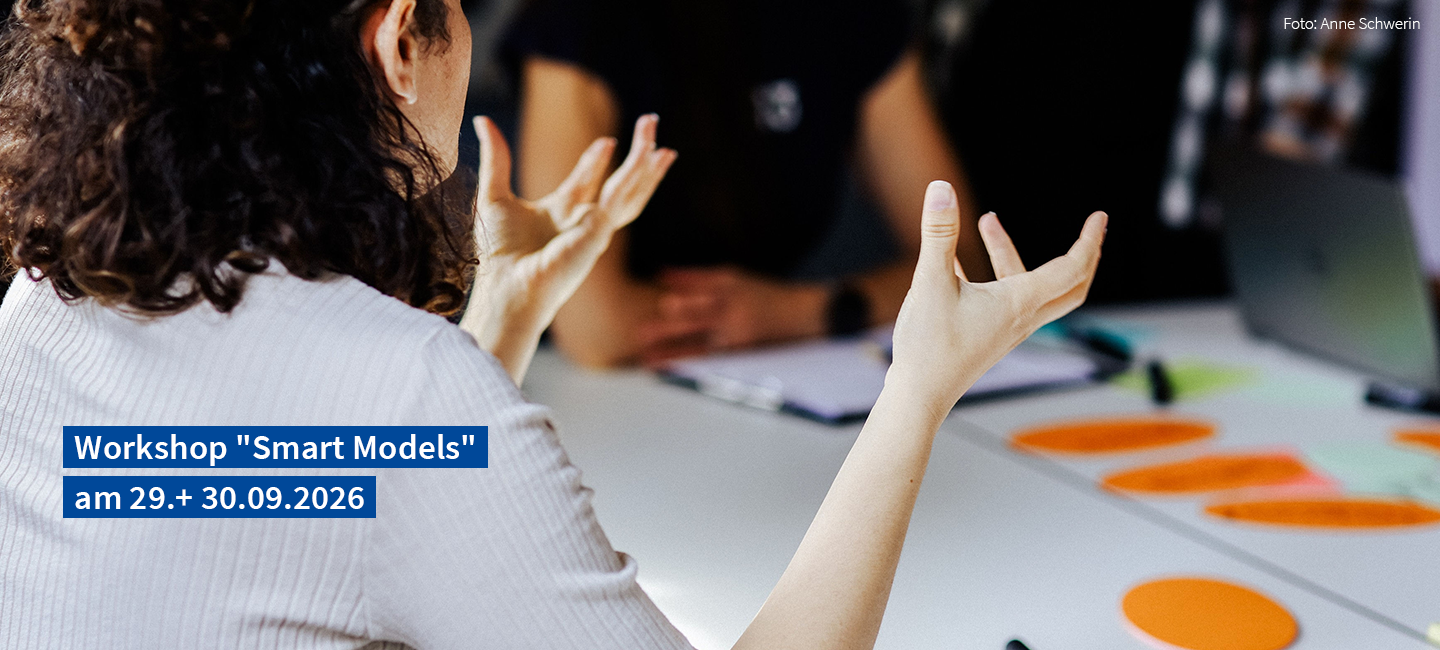
How can mathematical models be made more efficient, better connected and more adaptable? The ‘Smart Models’ workshop brings together researchers from various disciplines and Leipzig-based research institutions to discuss current approaches to modelling, simulation and model reduction. The focus is on interdisciplinary exchange, new collaborations and the question of how smart models and digital twins can be jointly developed and utilised in the future.
Who is the workshop aimed at?
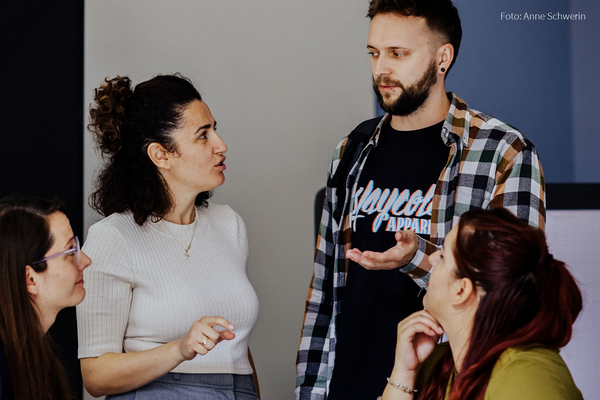
We welcome researchers – particularly early-career researchers – from Leipzig and partner institutions who develop, couple, reduce or validate models in mathematics, environmental and atmospheric research, CFD, machine learning or research software. The common thread is the methodology, not the specialist field.
In addition, several open-format sessions are planned, where mathematical consultancy can be offered, research collaborations initiated and opportunities for involvement in teaching and the supervision of final-year dissertations explored.
Aims of the workshop
- Discussions on current topics in mathematical modelling, model reduction, numerical methods and simulation, as well as related software development projects
- Networking among research institutions in Leipzig and the initiation of future research collaborations
Mathematical models of varying dimensions and complexity, which are developed, validated and applied in an interdisciplinary manner at many institutions in Leipzig, should nowadays also be as ‘smart’ as possible.
Not only must the models be sufficiently accurate and allow for highly effective numerical simulation on the respective available computer architectures, but they should also be able to be seamlessly integrated with other (possibly AI) models via interfaces or ports, be hierarchical to enable automated simulation at varying levels of realism, and cope with a data-rich environment in which they are subject to constant change yet are still expected to deliver accurate predictions at all times.
The workshop aims to provide an up-to-date overview of current developments in ‘smart models’ and ‘digital twins’ and to discuss the areas in which we could make joint progress.
Procedure and timetable
Following an initial get-together and networking event in the late afternoon and evening of 29 September 2026, the “Smart Models” workshop – funded by the LSN-NetzWerkstatt – will begin on 30 September 2026 with joint presentations from the participating institutions HTWK, UFZ, Tropos and DBFZ, followed by a discussion. These will provide, on the one hand, an overview of relevant research at each institution and, on the other, a deeper insight into specific research challenges. This will be followed by keynote presentations by external researchers, designed to complement Leipzig’s areas of expertise and stimulate joint research topics. After a lunch break, which will also provide an opportunity for networking, there will be presentations on specific topics, and the workshop will conclude with open discussion sessions on which objectives are to be achieved in the near future and which aspects could be tackled collaboratively.
Schedule for Day 1
- Day 1 – 29
September 2026 Afternoon / Evening
- 4.00–4.30 pm
Arrival & registration in ZU 417
- 4.45–5.45 pm
Networking and get-to-know-you session in ZU 417
(“3 minutes about me”, shared interests and goals)
- 6.00 pm – 8.00 pm
Group dinner (at participants’ own expense) in
Ratskeller Leipzig, Lotterstraße 1, 04109 Leipzig
- 4.00–4.30 pm
Schedule for Day 2
- Day 2 – 30 September 2026
- 08:30–09:00
Welcome & workshop objectives
How far have we come with ‘smart models’?
- 09:00-09:35 Uhr „Smart Models at MNZ@HTWK”
Sara Grundel, Jochen Merker (MNZ@HTWK) - 09:35-10:00 Uhr „Modelling at Leibniz-Science-Campus Biosmoke”
David Reitmajer (DBFZ), Ingo Hartmann (FING@HTWK) - 10:00-10:25 Uhr „The Chemical Mechanism Integrator Cminor”
Willi Schimmel (TROPOS) - 10:25-10:50 Uhr „Addressing the Challenge of Fracture Stress Evaluation in Nonlinear Bending Tests”
Stephan Schönfelder (FING@HTWK)
- 10:50-11:15 Uhr
Coffee break
- 11:15-11:45 Uhr „Model order reduction”
Benjamin Unger (Karlsruhe Institute of Technology KIT) - 11:45-12:15 Uhr „CFD Simulation of Biomass pyrolysis”
Andrea Dernbecher (TU Dortmund)
- 12:15-13:40 Uhr
Joint lunch (catering provided as part of the funding)
- 13:40-14:00 Uhr „Neural Feature Geometry Evolves as Discrete Ricci Flow”
Max von Rennesse (UL, MPI-MIS) - 14:00-14:20 Uhr „Matrix Methods for Reducing Large State-Space Models”
Patrick Kürschner (MNZ@HTWK) - 14:20-14:40 Uhr „Modeling of Droplet Formation”
Florian Muschka (FIM@HTWK), Jochen Merker (MNZ@HTWK) - 14:40-15:00 Uhr „Physics-informed Reinforcement Learning for Soccer Robots”
Akos Eröss (FING@HTWK)
- 15:00-15:30 Uhr
Coffee break
- 15:30-16:30 Uhr Open-format sessions on
future collaborations, integration of methods, grant applications, data exchange: - Opportunities to Participate in Teaching at HTWK: Rob Wessel (ScienceCareers@HTWK)
- Mathematical Consulting: Jochen Merker (MNZ@HTWK), online: Betti Hartmann, Christian Boehmer (UCL London), online: Sebastian Hanisch (sebastianhanisch.net)
- Future Collaborations and Grant Applications
- 16:30–16:45
Closing remarks & outlook
- 08:30–09:00
Organisation
The applicants conduct research at three institutions in Leipzig and bring complementary perspectives to “smart models”:
Sabine Attinger
UFZ / Uni Potsdam
Leitung Themenbereich “Smart Models/ Monitoring” am UFZ
Schwerpunkt: Analyse und Vorhersage komplexer Umweltsysteme
Jochen Merker
HTWK Leipzig, MNZ, Professur für Analysis und Optimierung
Leitung Mathematisch-Naturwissenschaftliches Zentrum
Schwerpunkt: Mathematische Methoden für digitale Zwillinge
Willi Schimmel
TROPOS Abteilung “Modellierung atmosphärischer Prozesse”
Schwerpunkt: Modellkopplung, recheneffiziente Löser,
graphentheoretische Komplexitätsreduktion chemischer Mechanismen, ML/HPC für atmosphärische Modelle
Contact person
- Phone:
- +49 341 3076-6472
How to get there and accommodation
Address:
Trefftz-Bau
, Room: TR_A-140
, Gustav-Freytag-Straße 43–45
, 04277 Leipzig
Travelling by public transport
The “Richard-Lehmann-Straße, HTWK” stop on campus is served by tramlines9, 10 and 11, all of which also depart from the main station:
- Line 9: towards Connewitz/Klemmstraße
- Line 10: towards Lößnig
- Line 11: towards Markkleeberg-Ost
Journey time: around 15 minutes.
From the east of Leipzig, you can also reach the campus by taking bus 70 (towards Markkleeberg-West).
Accommodation options near the conference venue / campus
Amedia Leipzig, Trademark Collection by Wyndham
, Windscheidstraße 21–23, 04277 Leipzig
. Within walking distance of the Connewitz Campus / Trefftz Building.
Accommodation near the city centre / main railway station
Victor’s Residenz-Hotel Leipzig
, Georgiring 13, 04103 Leipzig
. Right next to the main railway station; ideal for those travelling by train.
Dorint Hotel Leipzig
, Stephanstraße 6, 04103 Leipzig
. Close to the city centre; good public transport links to the campus.
